Before the wallpaper goes up, a few details deserve a look.
A wallcovering has to work with the surface beneath it and the shape of the room. These notes can help you make a more informed choice—without turning a first conversation into homework.
Wallpaper adheres to the surface beneath it. Loose paint, rough texture, old paste, moisture damage or a previous wallcovering may affect preparation and suitability. The condition can vary from wall to wall, even in the same room. Manufacturer directions and a closer look at the existing finish help frame what may be needed.
If a wall is freshly painted, give the paint the time recommended by its manufacturer before applying a new covering. Product instructions should guide compatibility and curing requirements.
A subtle repeat still has direction and scale.
02 / Pattern
A repeat is part of the room’s layout.
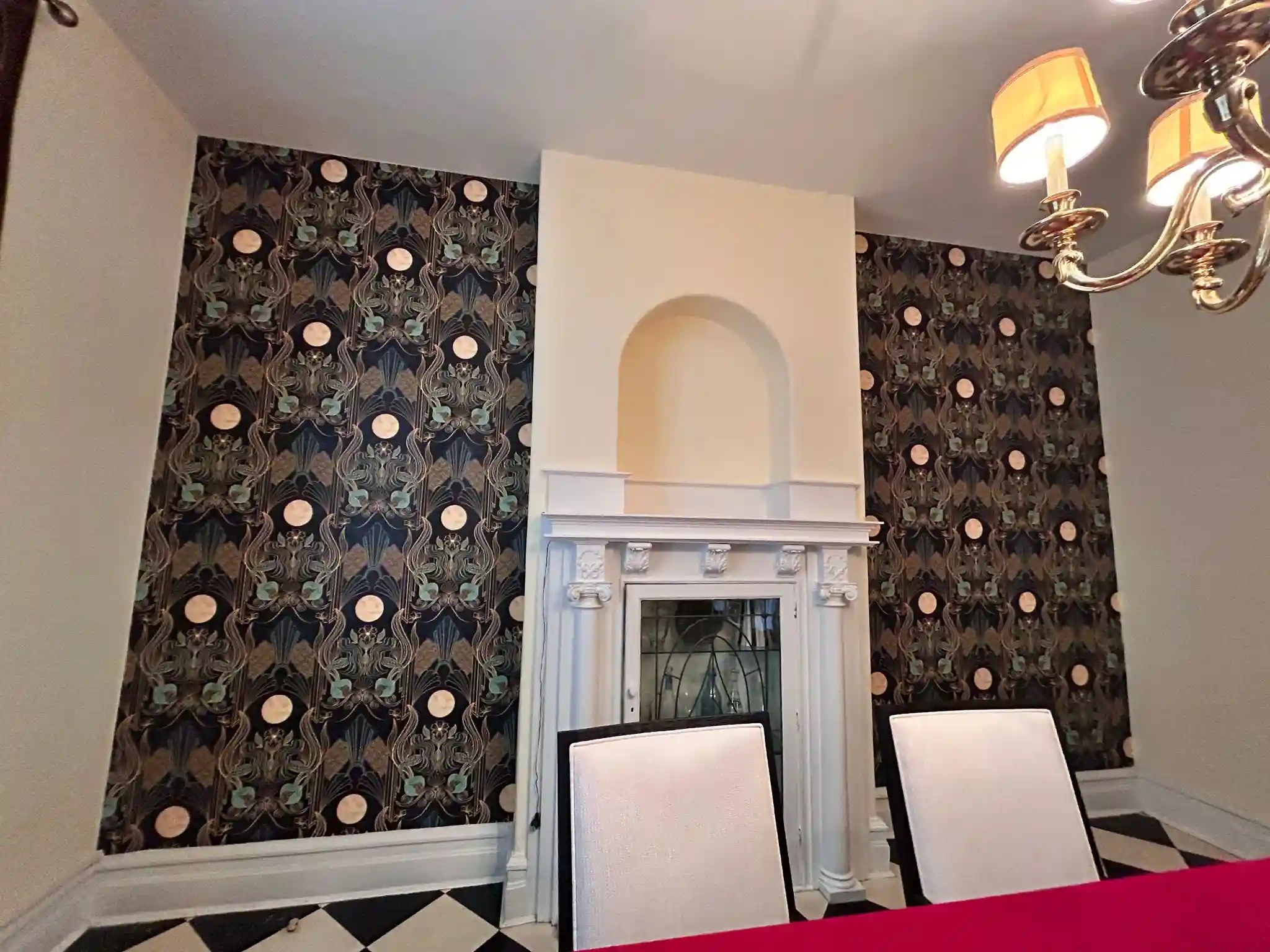
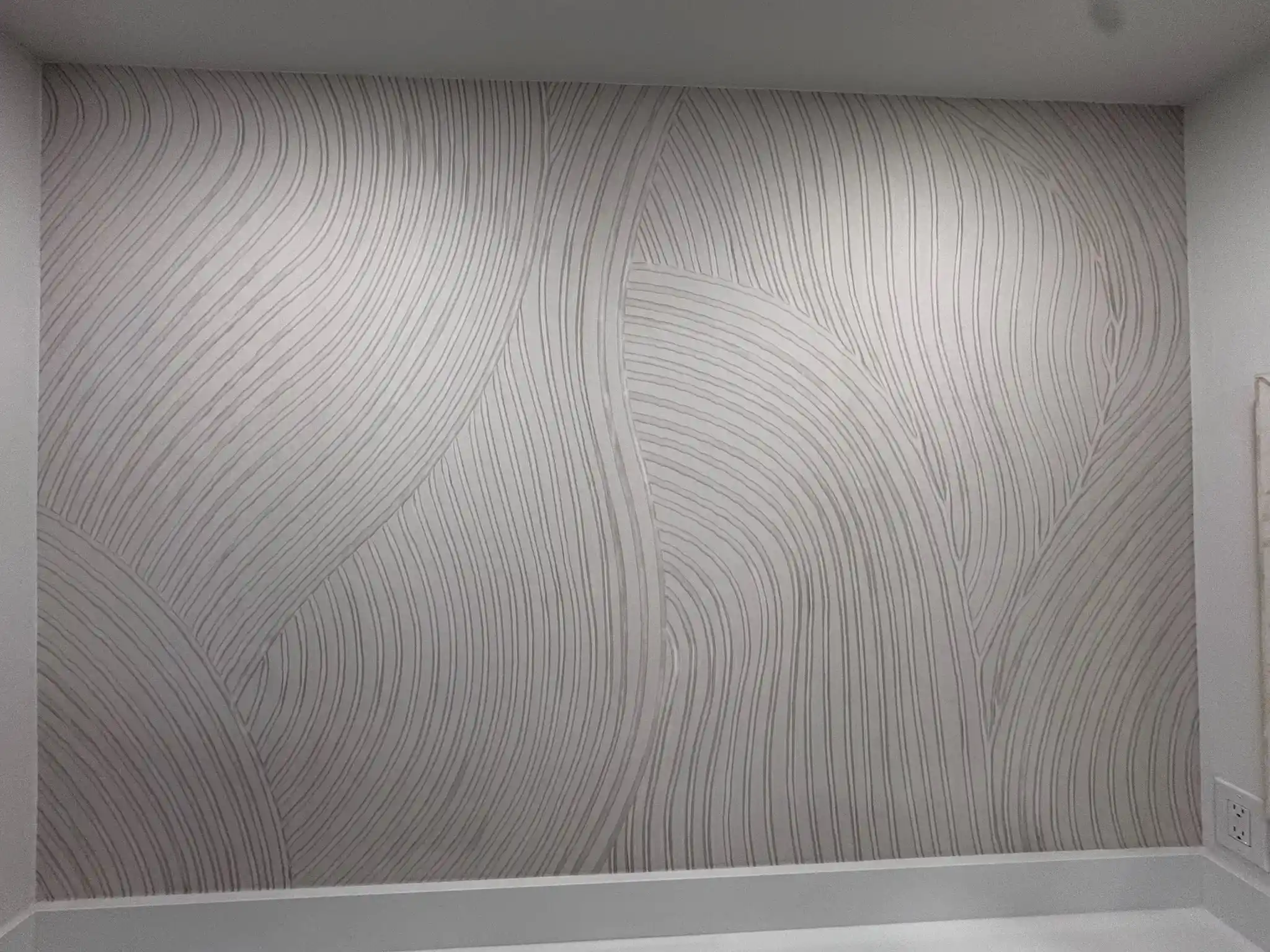
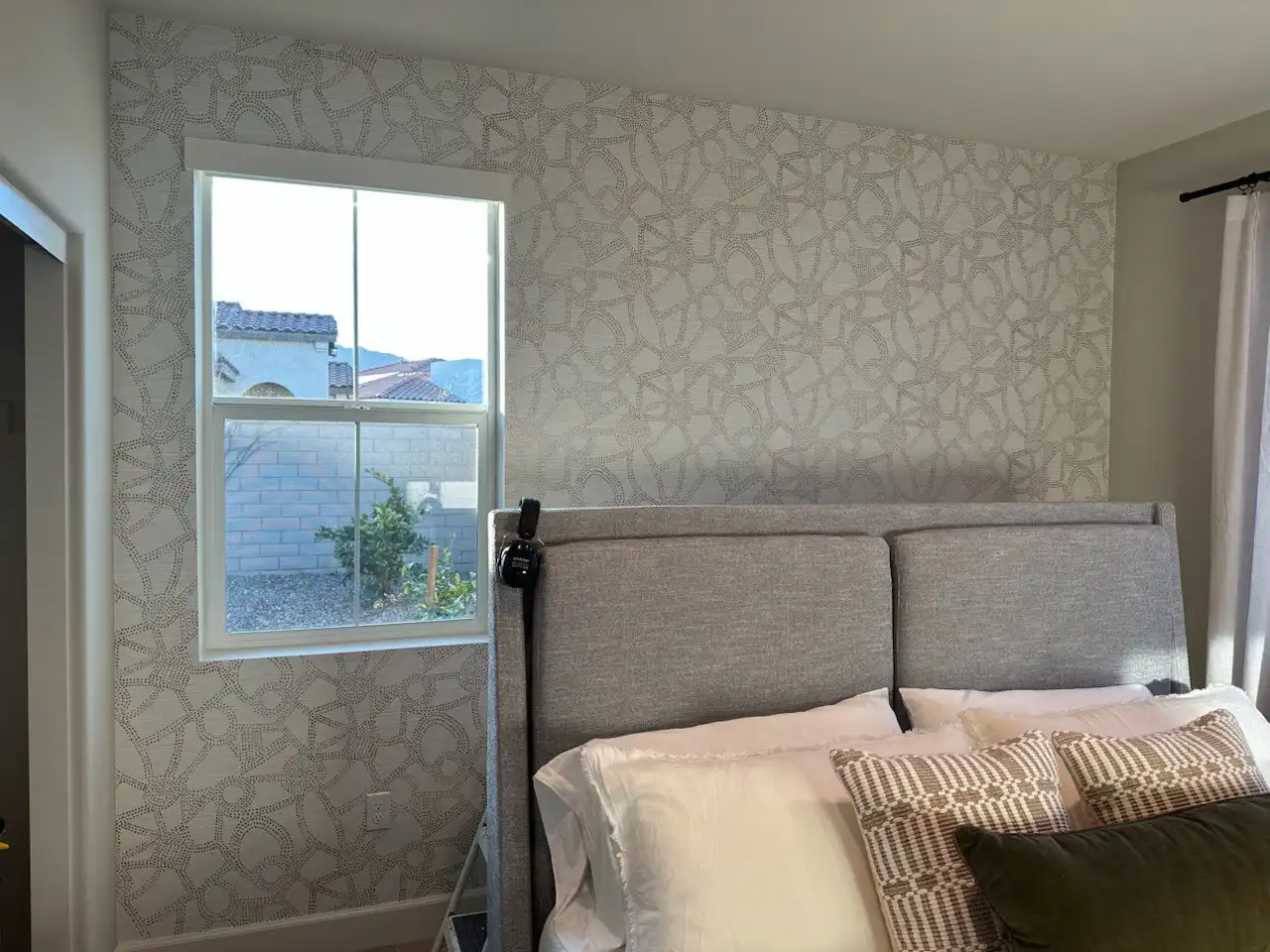
Patterned rolls repeat their design at set intervals. That repeat affects how much material may be needed and where the main motif lands near ceilings, corners, doors and windows. A larger or more directional pattern may call for more deliberate layout planning than a plain, non-directional texture.
Seams are the meeting lines between strips. Good alignment helps a repeating design read continuously. Room dimensions and the product’s repeat are useful inputs when calculating quantity, but you do not need them to begin a conversation.
03 / Material
Peel-and-stick still depends on the surface.
Self-adhesive wallpaper can be convenient, but it is not automatically compatible with every paint, wall texture or room condition. Dust, surface roughness, fresh coatings and manufacturer restrictions can affect how it adheres. Read the product directions and consider asking about your specific wall before buying material for a challenging surface.
If you already own the paper, the brand or installation instructions are helpful context—but optional for an initial call or inquiry.
One wall or the whole room
The shape of the project, the wall condition and the selected material all influence the right conversation.
04 / Scope
What can shape an estimate?
Useful context can include the number of walls, approximate dimensions, the wallpaper product and repeat, existing wallcoverings, visible wall damage, and obstacles such as trim or built-ins. Commercial projects may also be discussed in terms of the areas to cover and the material specified for them.
You can share whatever you know. Photos, dimensions and a product link may help with a more detailed estimate, but they are not prerequisites for speaking with the business or sending an initial message.
Common questions
Short answers before you start.
Each wall and product is different. If your question depends on a specific material or surface, call and describe what you are seeing.
Can I call before I know my wall measurements?
Yes. An initial conversation does not require exact dimensions. You can describe the room and ask what details might be useful later. You may also call to ask whether an on-site assessment or measurement visit can be arranged; visits are subject to confirmation.
Can wallpaper be installed over an existing covering?
That depends on the existing material, its condition and the new product’s installation directions. Old seams, texture or loose areas can affect the finished surface, so the wall should be considered before choosing an approach.
Does wall preparation change with the wallpaper?
It can. Backing, adhesive recommendations and surface requirements vary across materials. The product instructions and the wall’s condition help determine the preparation worth discussing.
What details are helpful for an estimate?
Approximate dimensions, the number of walls, the wallpaper name or link, and notes about the current surface can help. Photos are optional. If you do not have those details yet, a phone call is still a good place to begin.
Is peel-and-stick suitable for every room?
No single answer fits every product or wall. Surface texture, paint condition, moisture exposure and the manufacturer’s instructions all matter. Share the product details and ask about the specific situation before relying on a general rule.
How should I plan for a patterned wallpaper?
Check the repeat and pattern direction on the roll label. The repeat affects material quantities and how a motif lands around room boundaries. A layout discussion can help identify what to consider before installation.